
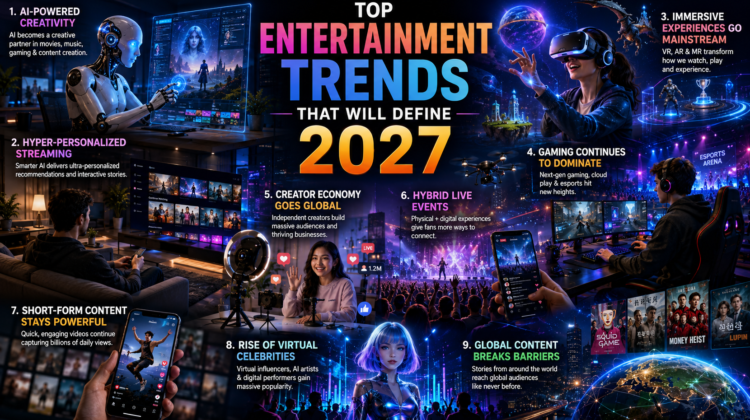
Entertainment has always evolved alongside technology, but the pace of change has never been faster than it is today. Just a decade ago, streaming services were disrupting cable television, social media was creating overnight celebrities, and artificial intelligence was still considered an experimental technology. Fast forward to 2027, and the entertainment landscape is entering an entirely new era where immersive experiences, AI-powered creativity, personalized content, and virtual worlds are becoming part of everyday life.
Audiences no longer consume entertainment in the same way they once did. Instead of simply watching movies or listening to music, people want interactive experiences, personalized recommendations, and deeper connections with creators. Businesses, studios, musicians, game developers, and streaming platforms are adapting quickly to these changing expectations.
As technology continues to reshape how stories are created, shared, and experienced, understanding the biggest entertainment trends of 2027 offers valuable insight into where the global industry is headed. Whether you’re a content creator, filmmaker, gamer, marketer, or simply an entertainment enthusiast, these trends are set to influence how millions of people enjoy digital content over the coming years.
1. Artificial Intelligence Will Become a Creative Partner
Artificial intelligence is no longer limited to automating repetitive tasks. By 2027, AI has become an essential creative assistant across nearly every entertainment industry.
Movie studios use AI to analyze audience preferences, optimize scripts, and improve visual effects. Musicians experiment with AI-powered composition tools to develop melodies and enhance production. Video creators generate storyboards, edit footage faster, and even produce realistic voiceovers with AI assistance.
Human Creativity Will Remain Essential
Despite AI’s impressive capabilities, audiences continue to value originality, emotion, and authentic storytelling. AI enhances creativity, but human imagination remains the driving force behind memorable entertainment.
2. Immersive Entertainment Will Go Mainstream
Virtual Reality (VR), Augmented Reality (AR), and Mixed Reality (MR) are transforming entertainment from passive viewing into active participation.
Instead of simply watching a movie, audiences can step inside fictional worlds. Concerts become immersive digital experiences where fans interact with performers in virtual venues. Museums, sporting events, and theme parks increasingly combine physical environments with digital storytelling.
As wearable technology improves and becomes more affordable, immersive entertainment will become accessible to millions of consumers worldwide.
3. Streaming Platforms Will Focus on Personalization
Streaming services are becoming smarter than ever.
Advanced recommendation systems now analyze viewing habits, emotional preferences, favorite genres, and even watch times to deliver highly personalized content suggestions.
Some platforms are experimenting with interactive storytelling where viewers influence plot developments, character decisions, and alternative endings.
Personalized entertainment is becoming one of the strongest competitive advantages in the streaming industry.
4. Gaming Will Continue Leading the Entertainment Industry
Gaming has evolved into one of the world’s largest entertainment sectors.
Modern games combine cinematic storytelling, social interaction, live events, esports competitions, and creator-driven content.
Cross-platform gaming allows players to seamlessly connect across consoles, PCs, and mobile devices while cloud gaming eliminates expensive hardware requirements.
Gaming Communities Drive Engagement
Many players spend as much time socializing inside games as they do playing them.
This growing sense of community continues strengthening gaming’s influence across entertainment.
5. Creator Economy Will Become Even More Powerful
Independent creators are reshaping entertainment.
Platforms supporting short-form videos, live streaming, podcasts, newsletters, and digital communities allow individuals to build global audiences without traditional media companies.
Brands increasingly collaborate directly with creators because audiences trust authentic voices more than conventional advertising.
By 2027, creator-led businesses are becoming major entertainment brands in their own right.
6. Live Events Will Blend Physical and Digital Experiences
Concerts, sports, festivals, and theater performances are becoming hybrid experiences.
Fans attending in person enjoy enhanced digital features, while remote viewers participate through virtual environments, multiple camera angles, real-time interactions, and exclusive online content.
Hybrid entertainment expands audience reach while creating entirely new revenue opportunities for organizers.
7. Short-Form Content Will Continue Dominating Attention
Modern audiences increasingly consume entertainment in smaller, more engaging formats.
Short videos, quick documentaries, bite-sized educational content, and mobile-friendly storytelling continue attracting billions of daily views.
However, rather than replacing long-form entertainment, short-form content often serves as a gateway that introduces audiences to movies, television series, podcasts, and full-length documentaries.
Both formats successfully coexist by serving different audience needs.
8. Digital Concerts and Virtual Celebrities Will Expand
Virtual performers are becoming increasingly sophisticated.
AI-generated influencers, digital musicians, holographic performances, and entirely virtual entertainment brands are attracting millions of followers worldwide.
Meanwhile, established artists are incorporating digital avatars, augmented reality performances, and metaverse experiences into global tours.
The definition of celebrity continues evolving beyond physical presence.
9. Interactive Storytelling Will Reach New Heights
Entertainment is becoming more participatory.
Interactive films, narrative games, educational experiences, and streaming experiments allow audiences to influence outcomes rather than simply observe events.
This deeper engagement strengthens emotional investment while encouraging repeat viewing and exploration of alternative storylines.
Studios increasingly recognize that participation creates stronger audience loyalty.
10. Global Content Will Continue Breaking Geographic Barriers
One of the most exciting trends defining 2027 is the worldwide popularity of international entertainment.
Audiences now enthusiastically embrace films, television series, animation, documentaries, and music from countries across Asia, Europe, Latin America, Africa, and the Middle East.
Improved subtitles, AI-powered translation, and streaming accessibility make global storytelling more discoverable than ever before.
Cultural diversity has become one of entertainment’s greatest strengths.
Looking Ahead: Entertainment Without Limits
The entertainment industry is entering one of its most exciting periods in history.
Artificial intelligence, immersive technologies, global connectivity, creator-driven businesses, personalized experiences, and interactive storytelling are fundamentally changing how audiences discover and enjoy content.
Yet amid all this technological innovation, one timeless principle remains unchanged.
People still seek stories that inspire, entertain, educate, and create emotional connections.
Whether those stories appear on cinema screens, smartphones, virtual reality headsets, gaming platforms, or streaming services, compelling storytelling will always remain at the heart of great entertainment.
The future belongs to creators and companies that successfully combine cutting-edge technology with authentic human experiences. Those willing to embrace innovation while preserving creativity will shape the next generation of movies, music, gaming, and digital media.
As 2027 unfolds, entertainment will become more immersive, personalized, global, and interactive than ever before. For audiences, that means richer experiences. For creators, it means limitless opportunities. And for the industry as a whole, it marks the beginning of an exciting new chapter where imagination and technology work together to redefine what entertainment can become.
Leave a Reply