
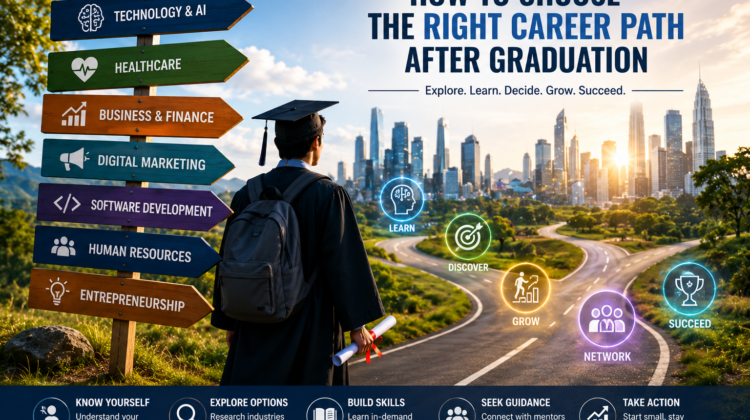
Graduation is one of life’s biggest milestones. After years of studying, exams, assignments, and dreams of entering the professional world, the moment finally arrives. Yet for many graduates, excitement is quickly replaced by uncertainty. Questions begin to surface. Should you pursue a job immediately? Is higher education the better option? Should you prepare for government exams, start a business, or learn new skills?
If you’re feeling overwhelmed, you’re not alone. Thousands of graduates around the world face the same challenge every year. The modern job market has evolved dramatically, especially with the rise of Artificial Intelligence, remote work, digital businesses, and rapidly changing industries. The career path that worked for someone five years ago may not be the best choice today.
The good news is that choosing the right career path doesn’t require having all the answers immediately. Instead, it requires understanding yourself, exploring opportunities, developing valuable skills, and making informed decisions.
This guide will help you confidently navigate life after graduation and choose a career that aligns with your interests, strengths, and future goals.
1. Understand Yourself Before Choosing a Career
The first and most important step isn’t searching job portals—it’s understanding yourself.
Many graduates choose careers simply because their friends are applying for the same jobs or because family members recommend a particular profession. While advice can be valuable, your career should ultimately match your own interests and personality.
Spend time identifying your strengths, weaknesses, passions, and natural abilities. Ask yourself what type of work genuinely excites you. Consider whether you enjoy solving technical problems, working with people, creating content, analyzing data, managing projects, or building businesses.
Self-Awareness Leads to Better Career Decisions
People who understand their interests tend to enjoy higher job satisfaction and stronger long-term career growth because they’re motivated to continue improving.
2. Research Growing Industries
The world of work is changing rapidly.
Industries such as Artificial Intelligence, cybersecurity, healthcare technology, renewable energy, digital marketing, cloud computing, financial technology, and data science continue expanding across global markets.
Instead of focusing only on traditional career options, research sectors expected to experience long-term growth.
Understanding industry trends helps ensure your chosen career remains relevant for years to come.
3. Match Your Degree with Future Opportunities
Your degree provides a strong academic foundation, but it doesn’t have to limit your career choices.
Engineering graduates often move into software development, AI, product management, or consulting.
Commerce graduates increasingly enter data analytics, fintech, digital marketing, and business intelligence.
Arts graduates build successful careers in media, communication, UX writing, education, human resources, and content strategy.
Today’s employers value transferable skills alongside academic qualifications.
Your Degree Is a Starting Point
Graduation opens doors rather than defining your entire career.
Continuous learning allows professionals to successfully transition into new industries throughout their working lives.
4. Learn In-Demand Skills
One of the biggest differences between successful graduates and struggling job seekers is their commitment to learning practical skills.
Companies increasingly hire candidates who demonstrate workplace readiness rather than relying solely on academic performance.
Skills like Artificial Intelligence, prompt engineering, digital marketing, programming, cloud computing, project management, communication, data analysis, and cybersecurity significantly improve employability.
Online learning platforms now make these skills accessible regardless of your educational background.
5. Gain Real-World Experience
Experience remains one of the strongest factors employers consider during recruitment.
If you don’t yet have a full-time job, internships, freelance work, volunteer opportunities, personal projects, and part-time roles can help build valuable experience.
Practical work develops confidence while allowing you to discover which career environments suit your personality.
Even small projects demonstrate initiative and commitment.
6. Build Your Professional Network
Career opportunities often come through people rather than online job advertisements.
Networking doesn’t mean asking strangers for jobs. It means building meaningful professional relationships with mentors, professors, classmates, industry experts, recruiters, and professionals working in your field.
Relationships Create Opportunities
Strong professional networks provide career advice, industry insights, referrals, internships, collaborations, and long-term mentorship.
Networking becomes increasingly valuable throughout your career.
7. Develop Strong Communication Skills
Technical knowledge alone rarely guarantees career success.
Employers highly value professionals who communicate clearly, collaborate effectively, solve problems, and work confidently within diverse teams.
Communication includes public speaking, writing, listening, presentations, negotiation, and interpersonal relationships.
These human skills become even more valuable as AI automates routine technical tasks.
8. Consider Higher Education Carefully
Many graduates immediately enroll in postgraduate programs without evaluating whether additional education supports their career goals.
Higher education can provide significant advantages for specialized careers, research positions, healthcare, law, and academia.
However, in many industries, practical skills and work experience may deliver faster career growth than another degree.
Choose further education strategically rather than automatically.
9. Stay Flexible as Industries Evolve
Few professionals remain in exactly the same career throughout their lives.
Technology continuously creates new job roles while changing existing professions.
Many careers that exist today didn’t exist ten years ago.
Being flexible allows you to adapt to changing market demands instead of fearing them.
Adaptability Is the Career Skill of the Future
Professionals willing to learn, reskill, and embrace change remain competitive regardless of economic conditions.
Continuous improvement creates lasting career security.
10. Create a Long-Term Career Plan
Rather than focusing only on your first job, think about where you want to be five or ten years from now.
Ask yourself what lifestyle you hope to achieve, what industries interest you most, and which skills will support your future ambitions.
Breaking long-term goals into smaller milestones makes career planning far less overwhelming.
Review your progress regularly and adjust your plan as new opportunities emerge.
Common Mistakes Graduates Should Avoid
Many graduates compare themselves to friends who secure jobs more quickly.
Everyone’s career journey is different.
Avoid choosing careers solely because they appear popular or offer high starting salaries.
Don’t stop learning after graduation.
Avoid waiting for the perfect opportunity before taking action.
Small experiences often lead to bigger opportunities later.
Most importantly, don’t fear changing direction if you discover a better career fit.
Successful professionals continuously adapt throughout their careers.
Final Thoughts
Choosing the right career path after graduation is one of the most important decisions you’ll make, but it doesn’t have to be perfect from the beginning.
The modern workplace rewards curiosity, adaptability, practical skills, emotional intelligence, and continuous learning far more than following a single predetermined path.
Your first job is only the beginning of a much longer professional journey. Every internship, project, certification, mentor, and learning experience contributes to your growth.
Take time to understand yourself, research future industries, build valuable skills, and remain open to new opportunities.
Remember that careers are built step by step rather than overnight. With patience, persistence, and a commitment to lifelong learning, you can create a rewarding career that offers both professional success and personal fulfillment in 2026 and beyond.
Leave a Reply