
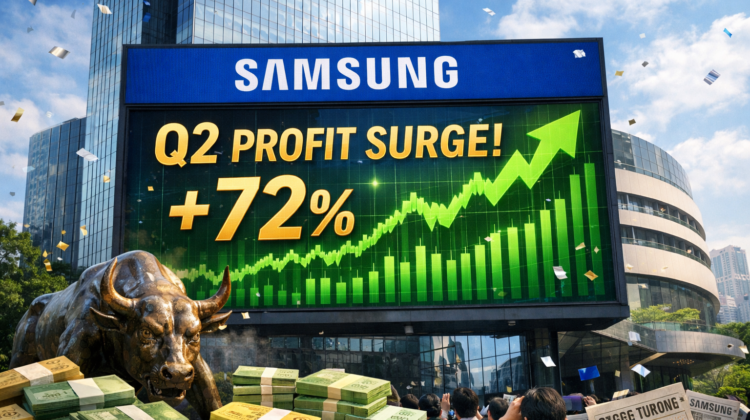
Seoul, July 7: Samsung Electronics reported a sharp rise in its estimated second-quarter earnings, driven by continued strength in the memory chip business fueled by artificial intelligence (AI) demand. Despite the impressive financial performance, the company’s stock came under heavy selling pressure as investors questioned whether the current AI-driven growth cycle can be sustained.
According to Samsung’s preliminary earnings guidance, the company expects operating profit for the April-June quarter to reach 89.4 trillion won (approximately $58.4 billion), marking a nearly 19-fold increase compared to the same period last year. The projected figure also exceeded market expectations, reflecting the strong recovery in the semiconductor business.
The technology giant also forecast quarterly revenue of 171 trillion won, representing a 129% year-on-year increase, highlighting robust demand across its memory chip portfolio.
Shares Fall Despite Strong Earnings
Although Samsung delivered better-than-expected earnings, investors reacted cautiously. The company’s shares declined nearly 7% by the close of trading after falling as much as 10% during the session.
The selling pressure extended across South Korea’s semiconductor sector, with rival chipmaker SK Hynix also recording significant losses. The broader KOSPI index ended sharply lower as concerns over the future pace of AI-related investments affected market sentiment.
Market participants believe Samsung’s strong earnings had already been priced into the stock after its recent rally, leaving little room for further upside following the announcement.
AI Demand Continues to Boost Memory Business
The company’s earnings were largely supported by strong pricing in the memory chip market. Rising demand for AI data centres has significantly increased purchases of high-performance memory products, while conventional DRAM and NAND chips also experienced healthy price growth due to tighter supply conditions.
Industry analysts noted that expanding production of advanced AI memory chips has reduced the availability of traditional memory products used in smartphones, personal computers and enterprise servers, helping maintain firm pricing across the sector.
Even after accounting for employee bonus provisions linked to semiconductor profits, Samsung still reported exceptionally strong earnings. Analysts believe operating profit could have exceeded 100 trillion won without these one-time expenses.
Investors Worried About AI Spending Outlook
Despite the strong quarterly performance, investors remain focused on the long-term sustainability of the AI investment cycle.
Several market experts have warned that major global technology companies may eventually slow spending on AI infrastructure after making record investments over the past year. Any moderation in capital expenditure by leading cloud service providers could reduce future demand for memory chips.
As a result, semiconductor stocks have recently experienced increased volatility, with investors reassessing growth expectations for the industry.
Revenue Growth Slightly Below Optimistic Expectations
While Samsung’s profit guidance exceeded forecasts, some analysts pointed out that revenue growth was marginally below the most optimistic market estimates.
They attributed the difference to more moderate price increases for DRAM memory than previously anticipated. Although pricing remained strong, investors had expected even faster growth after the rapid recovery seen earlier this year.
Analysts believe the memory market will continue to perform well in the near term, but the pace of gains may gradually normalize after the exceptional growth witnessed during the first half of the year.
Expansion Plans Continue
Samsung remains committed to expanding its semiconductor manufacturing capacity to meet growing AI-related demand. Together with other major chipmakers, the company has announced significant long-term investments aimed at increasing production of advanced memory technologies.
However, these aggressive expansion plans have also raised concerns about the possibility of excess supply if AI spending slows in the coming years.
Samsung is expected to release its complete second-quarter financial results later this month, including detailed earnings from each of its business divisions.
Outlook
The company enters the second half of the year with strong momentum in its semiconductor business, supported by healthy memory prices and growing AI adoption worldwide. Nevertheless, investor sentiment will likely remain sensitive to developments in AI infrastructure spending, global technology investment trends and the broader semiconductor market.
While Samsung’s latest earnings demonstrate the strength of the current AI boom, markets will be closely watching whether demand remains strong enough to justify continued large-scale investments across the chip industry.
Leave a Reply