
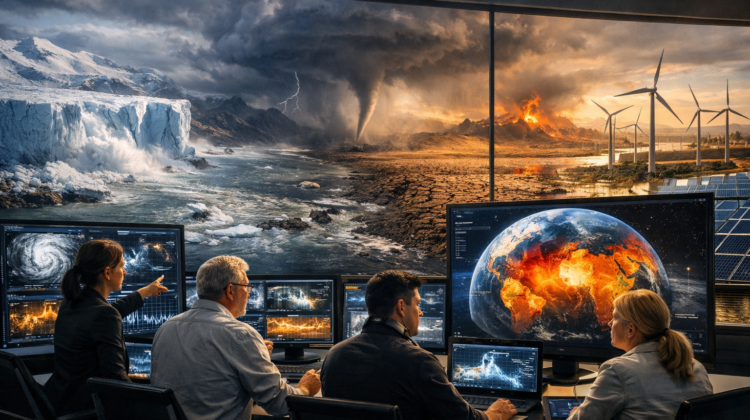
Climate change is no longer a distant environmental concern discussed only in scientific reports or policy conferences. In 2026, it has become a lived reality shaping economies, public health, global politics, and everyday life. From extreme weather events to rapid technological innovation in green energy, the world is witnessing both the harsh consequences of climate disruption and the accelerating response to it.
What makes today’s climate news particularly important is not just the scale of change but the speed at which it is happening. Heatwaves are breaking records, sea levels continue to rise, and ecosystems are shifting faster than predicted. At the same time, governments, scientists, and industries are deploying new strategies to adapt, reduce emissions, and restore environmental balance.
Understanding the latest climate change updates is essential because the decisions made today will define the planet for generations to come.
1. Global Temperatures Continue to Break Records
One of the most consistent headlines in climate science is the ongoing rise in global temperatures. Recent data shows that average global temperatures are now significantly higher than pre-industrial levels, with multiple regions experiencing prolonged heatwaves throughout the year.
In many parts of Asia, Europe, and North America, summer temperatures are reaching levels that strain energy systems and public health infrastructure. Heat-related illnesses are increasing, particularly among vulnerable populations such as the elderly and outdoor workers.
Scientists emphasize that these temperature increases are not isolated events but part of a long-term warming trend driven primarily by greenhouse gas emissions. This has intensified global urgency around climate mitigation strategies.
2. Extreme Weather Events Are Becoming More Frequent
Another major theme in global environmental news is the rising frequency and intensity of extreme weather events.
Floods, hurricanes, wildfires, and droughts are occurring with greater unpredictability. Coastal regions are experiencing stronger storm surges, while inland areas are facing prolonged dry spells that impact agriculture and water supply.
In 2026, several regions have reported record-breaking rainfall events followed by severe flooding, displacing thousands of people and causing significant economic damage. At the same time, wildfires in dry regions are spreading faster due to higher temperatures and reduced moisture levels.
These events highlight the growing connection between climate change and disaster risk, forcing governments to invest more heavily in climate resilience and emergency preparedness.
3. Rising Sea Levels Threaten Coastal Cities
Sea level rise remains one of the most serious long-term consequences of climate change. Melting glaciers and thermal expansion of seawater are gradually increasing ocean levels, placing coastal cities at risk.
Urban centers in Asia, Europe, and the Americas are already investing in flood barriers, sea walls, and advanced drainage systems. Some low-lying island nations are facing existential threats, prompting international discussions on climate migration and relocation planning.
In 2026, coastal adaptation projects have become a priority in global infrastructure spending, with governments recognizing that prevention is more cost-effective than post-disaster recovery.
4. Renewable Energy Expansion Accelerates Worldwide
Despite the challenges, one of the most positive developments in climate news is the rapid expansion of renewable energy.
Solar, wind, and hydropower projects are growing at unprecedented rates. Technological improvements have significantly reduced the cost of renewable energy production, making it more competitive with fossil fuels.
Many countries are setting ambitious carbon neutrality targets, with 2026 seeing increased investment in large-scale solar farms, offshore wind projects, and battery storage systems.
Energy companies are also shifting business models toward sustainability, integrating clean energy portfolios into their long-term strategies. This transition is reshaping global energy markets and reducing reliance on fossil fuels.
5. Climate Technology and Innovation Are Transforming Solutions
Technology is playing a crucial role in addressing climate change. Innovations in artificial intelligence, satellite monitoring, and climate modeling are helping scientists better understand environmental patterns.
AI-driven systems are now used to predict weather events more accurately, optimize energy consumption, and track deforestation in real time. Satellite imaging provides detailed insights into ice sheet melting, forest loss, and ocean temperature changes.
Carbon capture technologies are also advancing, offering potential solutions to reduce atmospheric carbon dioxide levels. While still in early stages, these technologies represent a promising step toward large-scale emissions reduction.
6. Agriculture Faces Increasing Pressure from Climate Change
Agriculture remains one of the most vulnerable sectors to climate change.
Changing rainfall patterns, soil degradation, and temperature fluctuations are affecting crop yields across many regions. Farmers are being forced to adapt by adopting drought-resistant crops, precision farming techniques, and AI-based agricultural monitoring systems.
Food security is becoming a growing concern, especially in regions heavily dependent on rain-fed agriculture. Governments and international organizations are investing in sustainable farming practices to ensure stable food production in a changing climate.
7. Climate Policy and Global Cooperation Intensify
Climate change is now a central issue in global diplomacy. International agreements are focusing on emission reductions, sustainable development, and climate finance.
Countries are being encouraged to meet stricter carbon reduction targets while supporting developing nations in their transition to clean energy. Climate funding mechanisms are expanding to help vulnerable countries adapt to environmental changes.
In 2026, climate negotiations are increasingly tied to economic policy, trade agreements, and technological collaboration. This reflects a growing understanding that climate change is not only an environmental issue but also a global economic challenge.
8. Environmental Awareness Is Growing Among Consumers
Public awareness of climate change has significantly increased in recent years. Consumers are becoming more conscious of their environmental footprint, influencing market trends and corporate behavior.
Demand for sustainable products, eco-friendly packaging, and ethically sourced goods is rising. Companies are responding by adopting greener supply chains and transparent sustainability reporting.
Social media and digital platforms are also playing a key role in spreading environmental awareness, making climate information more accessible to global audiences.
9. Biodiversity Loss Continues to Raise Concerns
Alongside climate change, biodiversity loss remains a critical environmental issue. Ecosystems are under pressure from deforestation, pollution, and habitat destruction.
Wildlife populations are declining in many regions, affecting ecological balance and food chains. Conservation efforts are being expanded to protect endangered species and restore natural habitats.
Scientists warn that biodiversity loss and climate change are interconnected, meaning that solving one challenge requires addressing the other simultaneously.
10. The Future of Climate Action: Adaptation and Responsibility
As the world moves further into 2026, climate action is shifting from awareness to implementation. Governments, businesses, and individuals are focusing on adaptation strategies that reduce risk and build resilience.
Cities are redesigning infrastructure to withstand extreme weather, companies are investing in sustainable operations, and individuals are making lifestyle changes to reduce carbon footprints.
While challenges remain significant, the direction of global action is becoming clearer: sustainability is no longer optional but essential.
Conclusion: A Turning Point for the Planet
The latest climate change updates show a world at a critical turning point. Rising temperatures, extreme weather, and environmental stress are clear warnings of what is at stake. At the same time, rapid progress in renewable energy, technology, and global cooperation offers hope for meaningful change.
The future of the planet depends on how quickly and effectively societies respond to these challenges. In 2026, climate change is not just a scientific issue—it is a defining factor in global development, economic stability, and human survival.
The story of climate change is still being written, and the actions taken today will shape the world of tomorrow.
Leave a Reply