
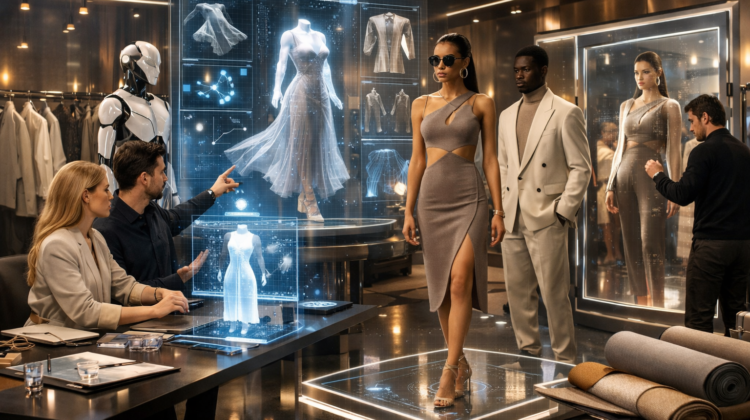
Fashion has always been about innovation. From handcrafted garments to mass production and now digital-first experiences, the industry constantly reinvents itself. In 2026, another revolution is reshaping the world of fashion, and this time it is powered by artificial intelligence.
AI is no longer just a futuristic concept reserved for tech companies. It has become an essential tool for fashion designers, retailers, manufacturers, and even consumers. Whether it is predicting next season’s trends, creating original clothing designs, offering personalized shopping experiences, or reducing waste through smarter production, AI is influencing every stage of the fashion lifecycle.
The most exciting part is that AI is not replacing creativity. Instead, it is helping creative professionals work faster, make better decisions, and build more sustainable businesses. As brands compete in an increasingly digital marketplace, understanding how AI is transforming the fashion industry has become more important than ever.
1. AI Is Revolutionizing Fashion Design
Designing clothing once required weeks of sketching, researching, and creating prototypes. Today, AI significantly shortens that process.
Modern AI design platforms analyze millions of fashion images, runway collections, social media trends, customer preferences, and historical sales data to suggest fresh design ideas. Designers can experiment with colors, textures, fabrics, and silhouettes in minutes instead of days.
Rather than replacing designers, AI acts as a creative assistant. It provides inspiration while allowing professionals to focus on artistic direction and storytelling.
Luxury brands and independent designers alike are using AI to create digital mood boards, generate multiple design concepts instantly, and visualize finished garments before producing physical samples.
This approach reduces costs while encouraging greater experimentation.
2. AI Trend Forecasting Is Becoming More Accurate
Predicting fashion trends has always involved a mix of intuition and market research. AI changes that equation by analyzing enormous amounts of real-time information.
Instead of relying solely on seasonal fashion shows, AI evaluates search behavior, online shopping patterns, influencer content, street fashion, customer reviews, and social media conversations.
This enables brands to identify upcoming trends months before they become mainstream.
Retailers can respond faster to changing consumer preferences, reducing the risk of producing unpopular collections.
Fashion businesses in 2026 increasingly depend on predictive analytics to make inventory decisions, helping them stay ahead of competitors while minimizing financial risks.
3. Personalized Shopping Experiences Are Becoming the Standard
Consumers now expect shopping experiences tailored specifically to their tastes.
AI makes this possible by learning individual preferences through browsing history, previous purchases, preferred colors, favorite brands, body measurements, and shopping behavior.
Instead of showing thousands of products, AI recommends clothing that customers are genuinely likely to purchase.
These intelligent recommendations improve customer satisfaction while increasing sales for retailers.
Virtual shopping assistants now answer style questions, recommend complete outfits, suggest matching accessories, and even advise shoppers on seasonal fashion trends.
As personalization continues improving, customers spend less time searching and more time enjoying the shopping experience.
4. Virtual Try-On Technology Is Changing Online Shopping
One of the biggest challenges in online fashion has always been uncertainty about fit.
AI-powered virtual fitting rooms solve this problem.
Using smartphones, body scanning, and augmented reality, shoppers can see how clothes appear on their own bodies without visiting physical stores.
Advanced AI estimates body dimensions and predicts garment fit with remarkable accuracy.
Customers can compare different sizes, colors, and styles instantly.
This technology reduces return rates, improves customer confidence, and creates a more engaging online shopping journey.
As e-commerce continues growing throughout 2026, virtual try-ons are becoming an expected feature rather than a luxury.
5. AI Is Making Fashion Manufacturing More Sustainable
Sustainability has become one of fashion’s biggest priorities.
AI helps manufacturers reduce environmental impact by optimizing nearly every stage of production.
Factories use machine learning to estimate demand more accurately, preventing overproduction and excess inventory.
Smart production systems calculate the exact amount of fabric required for each garment, reducing material waste.
AI also monitors machinery, predicts maintenance requirements, and improves manufacturing efficiency.
Many brands now use AI to identify eco-friendly materials, improve recycling processes, and track supply chain emissions.
The result is a more sustainable fashion industry that benefits both businesses and the environment.
6. Smarter Inventory Management Improves Business Performance
Inventory management has traditionally been one of retail’s greatest challenges.
Ordering too much creates waste.
Ordering too little results in lost sales.
AI solves this problem through predictive inventory management.
Machine learning analyzes weather forecasts, local events, purchasing history, seasonal demand, economic conditions, and regional buying behavior.
Retailers receive highly accurate recommendations about which products to stock, where to distribute them, and when to replenish inventory.
This improves profitability while reducing unnecessary production.
Fashion businesses are increasingly using AI dashboards to make real-time inventory decisions based on constantly changing market conditions.
7. AI Is Transforming Fashion Marketing
Marketing has become far more data-driven than ever before.
Instead of launching broad advertising campaigns, brands now use AI to create personalized marketing experiences.
AI identifies customer interests, preferred communication channels, shopping habits, and purchase timing.
Email campaigns, product recommendations, advertisements, and promotional offers are customized for individual customers.
Generative AI also helps marketers create product descriptions, social media captions, campaign visuals, and promotional videos much faster than traditional methods.
This allows marketing teams to focus on strategy while AI handles repetitive content creation.
The result is higher engagement, stronger customer loyalty, and improved conversion rates.
8. AI-Powered Chatbots Are Enhancing Customer Support
Customer service expectations continue rising.
Consumers want instant answers regardless of time zones or business hours.
AI chatbots now provide intelligent support around the clock.
They answer questions about sizing, order tracking, shipping policies, product availability, returns, and styling advice within seconds.
Unlike traditional chatbots, modern AI assistants understand natural language and maintain conversational interactions.
If conversations become more complex, they seamlessly transfer customers to human representatives.
This combination improves customer satisfaction while reducing operational costs.
9. Digital Fashion and Virtual Clothing Are Creating New Opportunities
The rise of virtual worlds and digital content has created entirely new fashion markets.
Consumers increasingly purchase digital clothing for gaming, virtual reality, social media, and online avatars.
AI accelerates digital fashion creation by generating realistic clothing designs, textures, animations, and visual effects.
Fashion brands now launch digital-only collections alongside physical products.
Influencers and content creators use AI-generated outfits for online campaigns, reducing production costs while exploring limitless creative possibilities.
Digital fashion represents one of the fastest-growing segments of the industry in 2026.
10. Human Creativity Remains the Heart of Fashion
Despite AI’s impressive capabilities, fashion remains deeply emotional.
People connect with stories, craftsmanship, culture, and artistic expression.
AI can analyze trends and generate design ideas, but it cannot fully replace human imagination, emotional intelligence, or cultural understanding.
Successful fashion brands combine AI efficiency with authentic human creativity.
Designers continue making final creative decisions while AI provides insights, automation, and technical support.
The future belongs to professionals who know how to collaborate with intelligent technology rather than compete against it.
Challenges the Fashion Industry Must Still Address
Although AI offers remarkable benefits, several challenges remain.
Fashion companies must ensure responsible use of customer data while maintaining privacy and transparency.
Bias in AI algorithms can unintentionally influence recommendations or exclude diverse customer groups.
Copyright concerns surrounding AI-generated designs continue evolving as legal frameworks adapt.
Businesses also face the challenge of training employees to work alongside AI technologies instead of fearing automation.
Organizations that address these issues responsibly will build stronger customer trust and long-term success.
What the Future Holds Beyond 2026
The pace of AI innovation shows no signs of slowing.
Future fashion experiences may include fully personalized clothing designed instantly based on customer preferences, body measurements, lifestyle, and budget.
AI could automatically generate unique collections for every individual shopper.
Smart clothing equipped with wearable technology may become more common, while AI-powered sustainability systems continue reducing environmental impact across global supply chains.
Physical stores will also become more intelligent, offering interactive mirrors, automated styling assistants, and seamless checkout experiences.
Fashion will become increasingly connected, personalized, and data-driven while preserving the creativity that defines the industry.
Conclusion
Artificial intelligence has evolved from an experimental technology into a powerful force transforming every corner of the fashion industry. From smarter design processes and accurate trend forecasting to personalized shopping, sustainable manufacturing, and intelligent marketing, AI is helping brands innovate faster than ever before.
The most successful companies in 2026 are not choosing between humans and AI. They are combining the strengths of both to create better products, richer customer experiences, and more sustainable businesses.
As technology continues advancing, fashion will remain an industry driven by imagination, storytelling, and creativity—with AI serving as one of its most valuable partners rather than its replacement.
Leave a Reply